Co-Creating Municipal Waste Policy: The Case of a Citizens' Assembly in Kiryat Tivon
Location: Kiryat Tivon, Israel
Time Span: February – May 2022
Green SDGs: 11, 12, 13
Partners: Citizens’ Assembly Israel Initiative (AALI)/Democracy 3.0, Heschel Center for Sustainability, Kiryat Tivon Local Council, and residents
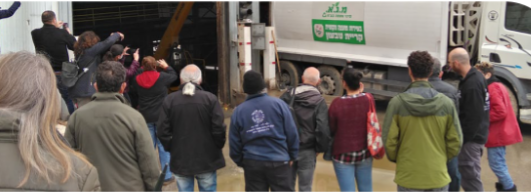
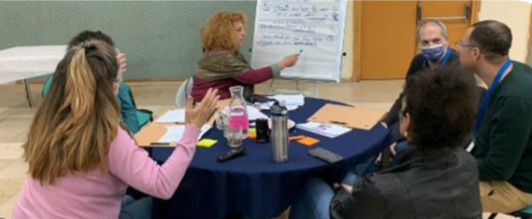
Between February and May 2022, the municipality of Kiryat Tivon, Israel, hosted the country’s first Citizens’ Assembly, an innovative participatory process designed to involve residents directly in shaping local waste management policy. The initiative was organized by Citizens’ Assembly Israel Initiative (AALI), later known as Democracy 3.0, in collaboration with the Heschel Center for Sustainability and the Kiryat Tivon Local Council. The project emerged from growing concerns about environmental sustainability and the need to reduce the municipality’s dependence on landfill disposal while promoting more responsible and resource-efficient waste practices.
The Citizens’ Assembly brought together 60 randomly selected residents who reflected the demographic diversity of the local community. Participants were invited to engage in a structured deliberative process that combined learning, dialogue, and decision-making. Throughout the assembly, residents attended expert presentations, reviewed evidence on waste management challenges, participated in discussions with stakeholders, and visited waste-related facilities to gain a deeper understanding of the environmental, social, and economic dimensions of local waste management. The process was carefully designed to ensure informed and balanced deliberation. Participants explored a wide range of perspectives presented by experts from government agencies, academia, civil society organizations, and the private sector. In addition, community consultations allowed residents outside the assembly to contribute ideas and concerns, helping ensure that the recommendations reflected broader public interests and local priorities. After several months of learning and deliberation, the assembly produced 22 recommendations aimed at transforming waste management in Kiryat Tivon. These recommendations covered areas such as waste reduction at source, recycling and sorting infrastructure, composting initiatives, environmental education, business regulation, public awareness campaigns, and the promotion of circular economy principles. The recommendations were formally presented to the local council, which committed to reviewing and implementing a number of the proposed actions through municipal planning and budgeting processes.
The case demonstrates the potential of deliberative democracy to address complex sustainability challenges at the local level. By bringing citizens, experts, and public authorities together in a collaborative decision-making process, the initiative strengthened trust between residents and local government, increased public engagement in environmental policy, and generated actionable solutions supported by the community. As Israel’s first Citizens’ Assembly, the project represents a pioneering example of citizen participation in environmental governance and contributes to broader goals related to sustainable communities, responsible consumption, and climate action.
In GOGREEN, we define the green SDGs as the following SDGs: SDG 6, SDG 7, SDG 11, SDG 12, SDG 13, SDG 14, SDG 15